How Many Cleaning Hours Does an Office Your Size Actually Need?
Quick Answer: Most offices need between one and three hours of crew time per visit for every 2,500 to 3,500 cleanable square feet, per cleaner. Square footage sets the starting number, but layout, restroom count, flooring, and foot traffic move it up or down. A 5,000 square foot open office might take one cleaner about two hours, while the same footage split into private offices and cubicles can take closer to three. Divide your cleanable square feet by the hours a crew plans to spend, and you will see whether the schedule matches the work.
You are reviewing a cleaning proposal for your office, and the number that jumps out is the time on site. One cleaner, ninety minutes, five nights a week. Your space is 6,000 square feet, with a kitchen, two restrooms, a conference room, and a front entry that collects wet footprints from October through May. You wonder whether ninety minutes is enough, or whether you are about to pay for a crew that will trash and go.
It is a fair thing to question, and it is also the question most people skip. Facility managers tend to compare cleaning proposals by frequency (nightly, three times a week, weekly) and never ask how many labor hours sit behind each visit. Hours are where the quality lives. A crew that is scheduled for too little time cannot do the work, no matter how good the people are.
Here is how to work out a realistic number for your own space, what changes it, and how to tell when the hours on a proposal do not add up.
Start With Cleanable Square Feet, Not Total Square Feet
The size on your lease is not the size your crew cleans. Total square footage includes walls, closets, mechanical rooms, server rooms, and storage areas that nobody services on a regular schedule. Your cleanable footage is the space that gets vacuumed, mopped, dusted, and wiped.
Subtract What The Crew Does Not Touch
For most offices, cleanable space accounts for 80–90% of leased square footage. A 10,000-square-foot suite may contain only 8,500 cleanable square feet.
Count The Fixtures Separately
Restroom cleaning depends on individual fixtures, not square footage. Toilets, urinals, sinks, and mirrors each require time. Record every fixture before requesting cleaning estimates.
Note The Surfaces
Carpet, hard floors, glass walls, and upholstered furniture require different cleaning times. Carpet needs vacuuming, while polished floors and glass partitions require mopping and glass cleaning.
What a Realistic Pace Looks Like
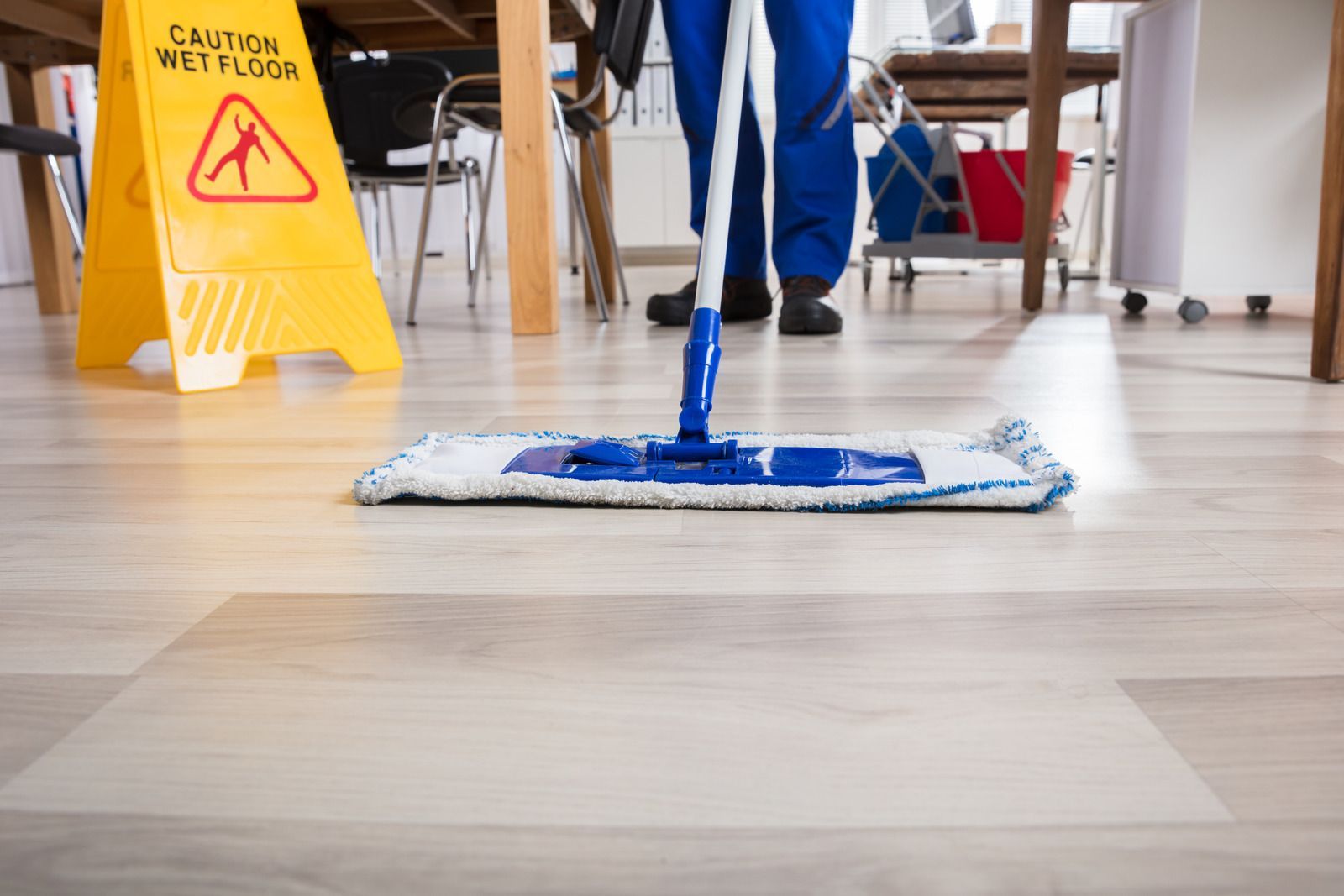
The industry measures cleaning in production rates, which is simply how much space one cleaner can properly service in an hour. The most cited reference is the ISSA cleaning times book, which catalogs hundreds of individual tasks with standard times. For example, vacuuming 1,000 square feet of carpet with a standard 12 inch upright is listed at roughly 35 minutes. Mopping an open hard floor moves much faster than vacuuming a room full of desks and chairs.
For a full nightly office clean that includes trash, vacuuming, restrooms, kitchen, and surface wipe downs, one cleaner typically covers about 2,500 to 3,500 square feet per hour. A lighter daytime touch up that only handles trash, restrooms, and visible surfaces can move at 5,000 square feet per hour or more, but that is a surface pass, not a full clean.
Those numbers give you a quick estimate. Take 6,000 cleanable square feet and divide by a pace of 3,000, and you land near two hours of labor. Ninety minutes for one cleaner would imply a pace of 4,000 square feet per hour, which is the speed of a light touch up.
TIP: Ask any cleaning company for the crew size and the planned time on site, then divide your cleanable square feet by total crew hours. If the answer is far above 3,500 square feet per hour for a full nightly clean, the hours are too thin for the scope listed.
Layout Changes the Number More Than Size Does
Two offices with the same footage can need very different hours. The floor plan decides how much of the crew's time goes to cleaning and how much goes to walking, moving, and working around furniture.
Open Plan Offices Are The Fastest
Wide carpeted areas allow vacuums to move in long passes, while fewer doors reduce interruptions. Shared workspaces mainly require trash removal, floor cleaning, and wiping common surfaces.
Private Offices And Cubicles Slow Everything Down
Each office requires separate attention, including doors, trash cans, desk edges, and corners. Twelve private offices can take longer than one open room covering the same area.
Conference Rooms And Training Rooms Add Detail Work
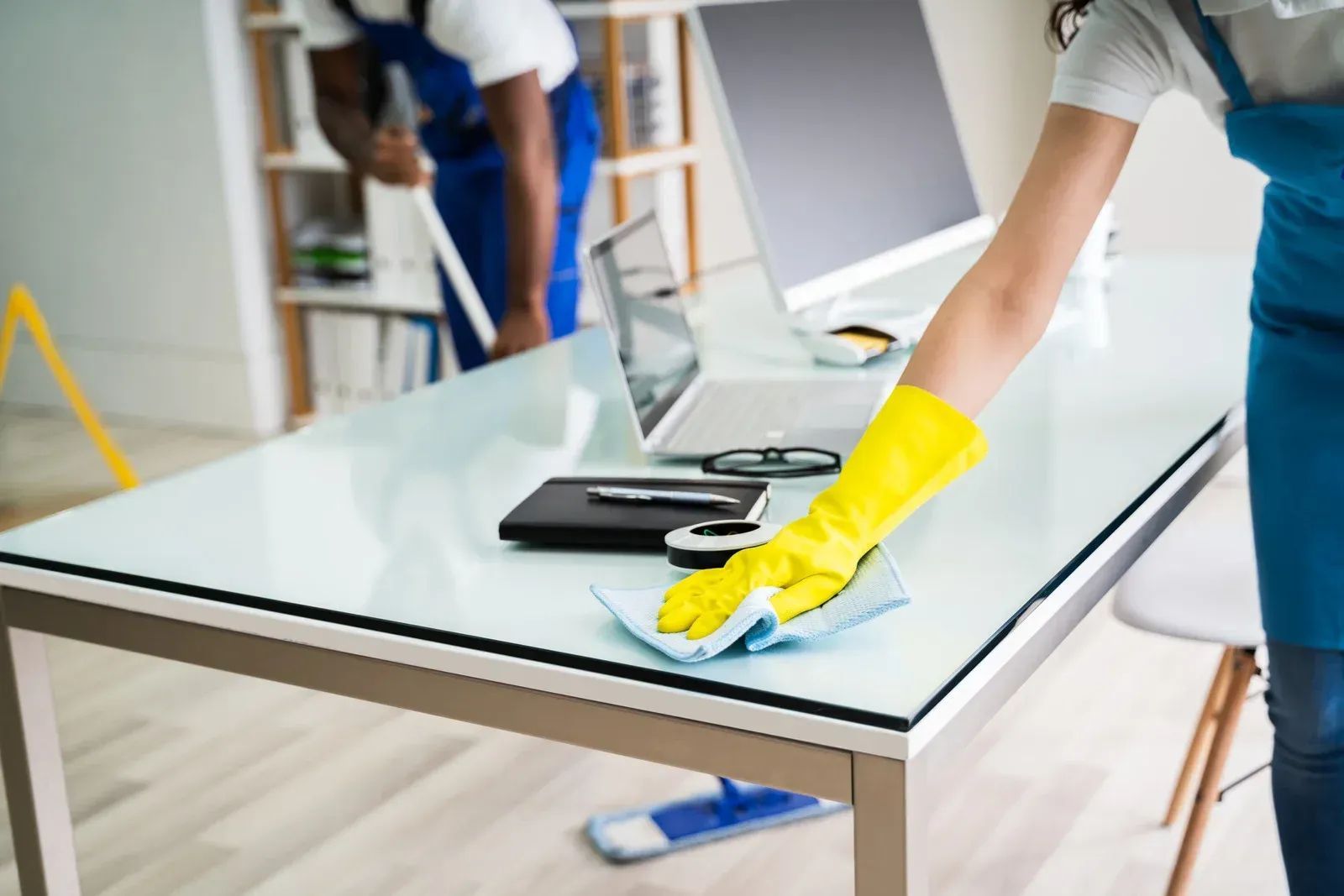
Tables need wiping, chairs require straightening, and whiteboards and glass need attention. Client meeting rooms deserve extra care because visitors often notice their condition first.
Kitchens And Break Rooms Take Extra Time
Sinks, counters, microwaves, refrigerator handles, and floors require detailed cleaning. A busy break room can take as long as an entire desk area, especially when employees eat onsite.
Restrooms Run on Their Own Clock
Restrooms deserve their own line in your hour count. Cleaning a toilet or urinal properly, including the base, the seat, the handle, and the surrounding floor, takes a few minutes each. Sinks, counters, mirrors, dispensers, partitions, and the floor add more. Ten fixtures at three minutes each is already thirty minutes per restroom before anyone refills a dispenser or mops.
This is why a small office with two multi stall restrooms can need as many hours as a larger office with a single restroom. If you have noticed that your restrooms look fine in the morning but smell off by afternoon, the cause is often hours: the crew had time for the visible surfaces but not the base of the fixtures or the floor edges.
Warning: Do not agree to a cleaning schedule based on a verbal promise that the crew will "work faster." Pace is limited by how many hands and how many minutes are on site. If the hours listed in the agreement do not match your square footage and fixture count, the shortfall will show up as skipped tasks.
Signs Your Current Hours Are Too Short
You do not need a stopwatch to tell when a crew is under scheduled. The building shows you.
Baseboards and Corners Collect Dust
Open floors are quick to vacuum, but edges, corners, and spaces under desks get skipped when time runs short.
Restroom Odor Returns Quickly
Fixture bases, floor drains, and partition bottoms trap odors. Persistent smells often indicate insufficient time for thorough cleaning.
Trash Cans Remain Grimy
Rushed crews replace liners without wiping can rims or exteriors, allowing grime to accumulate between cleaning visits.
Kitchen Surfaces Feel Sticky
Sticky handles and counter edges indicate surfaces were wiped too quickly without sufficient cleaning or contact time.
The Same Complaints Repeat
Recurring complaints about dusty shelves or dirty sinks rarely reflect effort alone. They often indicate insufficient cleaning time.
Signs You May Be Paying for More Hours Than You Need
The opposite problem exists too. Some offices have shrunk, moved to hybrid schedules, or closed off part of the floor, and the cleaning hours have stayed the same. If a crew regularly finishes early and leaves, or if whole rooms sit unused and untouched between visits, your schedule may be overbuilt.
In that case the answer is rarely to cut everything. A better approach is to shift the mix. Keep nightly service for restrooms, kitchens, and entries, and move the quiet rooms to a weekly rotation. A crew can walk your building and tell you which areas are getting cleaned that were not really dirty in the first place.
How to Test a Proposal Against Your Own Building
Before you accept any schedule, run a short check.
Step One: Calculate Your Cleanable Square Footage
Measure or estimate the total area your cleaning crew will actually service.
Step Two: List The Additional Cleaning Requirements
Count restrooms, fixtures, break rooms, conference rooms, glass walls, and specialty flooring.
Step Three: Confirm Crew Size And Onsite Hours
Request crew size and total hours; vague nightly cleaning proposals omit essential staffing details.
Step Four: Calculate The Implied Cleaning Pace
Divide cleanable square feet by total crew hours; compare results against the recommended range.
Step Five: Inspect The Building After One Week
Check corners, restroom bases, and break rooms to determine whether allocated cleaning hours are sufficient.
What to Do If the Numbers Do Not Match
If the hours look thin, bring it up early and bring your numbers. A good janitorial company will not be offended by the question. They will walk your space, look at your layout, and tell you what the job really takes. If the crew has been doing a quick pass because of a short schedule, you can add time to the right areas without paying for time in the wrong ones.
If the hours look generous, ask what is being done with them. A longer visit should show up as deeper work, such as detail cleaning, edges, and fixtures, not as more time spent walking the same floor.
Frequently Asked Questions
How many cleaning hours does a 5,000 square foot office need?
For a full nightly clean, one cleaner usually needs about one and a half to two hours for 5,000 cleanable square feet. Many private offices, busy break rooms, or several restrooms push that higher.
Does a small office need less than an hour of cleaning?
A very small office of 1,000 to 2,000 square feet can often be cleaned in under an hour. The restrooms and kitchen set the floor, so plan for at least forty five minutes with both.
Is it better to have two cleaners for half the time or one cleaner for the full time?
Two cleaners finish faster, and a second person lets one handle restrooms while the other handles floors and desks. Total labor hours stay the same, so quality should match when each person has clear tasks.
How does carpet versus hard flooring change the hours?
Carpet is slower to vacuum, especially around desks and furniture. Hard floors mop quickly in open areas but need dry time and careful edges. Buildings with a mix need time for each, so the blend matters.
How often should I review my cleaning hours?
Review them whenever your headcount, floor plan, or operating hours change, and at least once a year. Offices that add staff, open a new room, or shift to hybrid schedules often outgrow their original hours.
What should be in the cleaning proposal besides the number of hours?
Look for crew size, the task list for each visit, how often deeper work such as baseboards and glass happens, and how extra work is handled. A frequency with no time on site leaves you guessing.
Matching the Cleaning Hours to Your Building
The right number of cleaning hours is never a guess once you have the inputs in front of you. Cleanable square footage sets the starting point, fixture counts and layout adjust it, and the rainy Puget Sound season adds minutes you cannot read off a floor plan. Write those numbers down, divide them honestly against the crew hours offered, and any proposal becomes easy to judge. The time on site either fits the work or it does not.
A clean that holds up all week comes from matching labor to the building rather than to a calendar, and that match is what separates a quick pass from a real service. Platinum Cleaning Services LLC
has spent 25
years refining that approach for offices throughout Burien, WA, counting fixtures and reading traffic patterns before setting a single hour. When the hours are built around the actual work, a building looks the same on Friday afternoon as it did on Monday morning.
Recent Posts