Why Are Emergency Cleaning Services Essential for Businesses?
The call comes in at 11 p.m. on a Friday. A pipe burst in the break room, raw sewage has backed up into the lobby, or a sick employee left a biohazard situation on the warehouse floor. Your building opens at 7 a.m. You cannot rope it off and leave it. You cannot hand a mop to the overnight security guard and hope for the best.
This is exactly when emergency commercial cleaning becomes the difference between a single disrupted night and a week of operational loss, code violations, or permanent reputational damage.
Most business owners discover what emergency cleaning actually involves only after they need it for the first time. What looks like a surface issue is often a contamination problem that spreads with every hour it sits untreated. Blood, sewage, chemical spills, and post-flood debris carry pathogens and structural risks that standard janitorial supplies are not rated to address. Acting fast with the right response matters more than acting fast with the wrong one.
In the Pacific Northwest, the moisture-heavy climate around Burien and the broader King County corridor means biological contamination spreads faster than in drier regions. Mold colonization can begin in as little as 24 to 48 hours in conditions common to this area.
The Real Reasons Businesses Need Emergency Cleaning
Emergency cleaning is not simply faster janitorial service. It addresses a different category of problem entirely.
Standard commercial cleaning removes visible dirt and maintains hygiene during normal operations. Emergency cleaning responds to sudden, unplanned contamination events where delay causes secondary damage, regulatory exposure, or health risk. The distinction matters because the wrong response to a genuine emergency often makes things significantly worse.
Here are the core scenarios where emergency cleaning is not optional:
Biohazard events, including blood, bodily fluids, or sewage backup require OSHA-regulated remediation using EPA-registered disinfectants and personal protective equipment. Attempting this without proper training risks bloodborne pathogen exposure and violates standards applicable to employers.
Flood or water intrusion in commercial spaces demands extraction within 24 hours. After that threshold, porous materials lik e drywall, subflooring, and carpet backing begin supporting mold growth. Burien's proximity to Puget Sound and its high average annual rainfall of roughly 38 inches mean water intrusion events are more frequent here than in eastern Washington or drier metro areas
Post-incident debris and trauma scenes require chain-of-custody documentation and licensed disposal in addition to physical cleaning.
Chemical spills in commercial kitchens, warehouses, or medical offices require neutralization before cleaning. Mixing cleaning agents without knowing the original substance can create toxic fumes.
What Businesses Get Wrong in the First Hour
The most common mistake is treating an emergency contamination event like a regular mess and reaching for whatever is closest. Here is why that backfires:
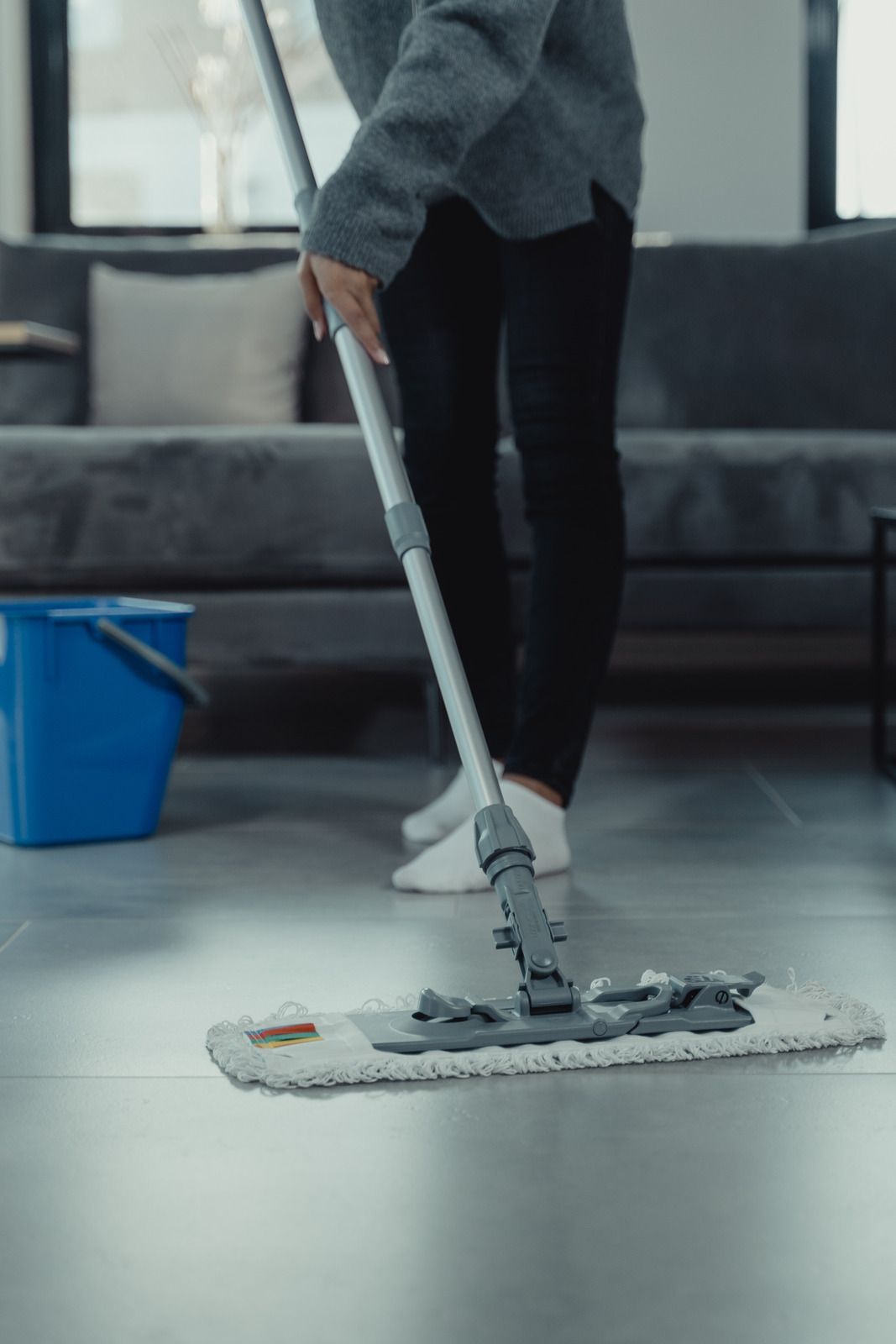
Standard mops and floor cleaners do not disinfect at the microbial level required after sewage or biohazard exposure. Spreading the contamination zone wider while wiping it down is a common result. A 10-square-foot spill can become a 40-square-foot contamination zone in under 20 minutes with the wrong response.
The second most common mistake is delaying the call because of cost concerns or uncertainty about whether the situation is "serious enough." In a humid climate like Burien's, biological material left for even 4 to 6 hours on porous surfaces dramatically increases remediation complexity and scope.
WARNING: If the emergency involves sewage backup, suspected chemical contamination, or blood, do not send employees in without proper PPE. Exposure to raw sewage can transmit E. coli, hepatitis A, and rotavirus. This is not a situation where improvisation is acceptable.
TIP: Before the emergency happens, confirm that your facility's emergency contact list includes a certified commercial cleaning company alongside your plumber and electrician. Post-incident response is dramatically faster when the call is made in the first 30 minutes rather than the first 3 hours.
Symptom and Response Reference
| What You Are Seeing | Most Likely Cause | Severity | First Step |
|---|---|---|---|
| Standing water in lobby or break room | Pipe burst or roof intrusion | High | Stop water source, call extraction service within 1 hour |
| Sewage odor from floor drains | Sewer line backup | High | Vacate the space, call licensed biohazard team |
| Blood or bodily fluid on surfaces | Workplace accident or incident | High | Do not touch, call certified biohazard cleaner |
| Chemical spill on warehouse floor | Container failure or forklift incident | High | Identify the substance, call HAZMAT-informed cleaning crew |
| Widespread vomiting or illness residue | Norovirus or food contamination event | High | Close affected area, request CDC-protocol deep disinfection |
| Smoke or fire residue on surfaces | Kitchen fire or equipment failure | Medium | Ventilate, avoid contact, call restoration cleaner |
| Broken glass or construction debris | Vandalism or contractor work | Medium | Secure area, call commercial cleanup for safe debris removal |
| Mold visible on walls after water event | Untreated moisture 48 hours or more | High | Do not disturb, call licensed mold remediation cleaner |
How a Professional Emergency Response Actually Works
When we arrive on an emergency commercial cleaning call, the first 15 minutes are entirely assessment, not action. Rushing into physical cleanup before understanding the contamination type is one of the fastest ways to spread a problem rather than contain it.
We identify the contamination category, assess the square footage affected, check ventilation and drain conditions, and determine whether the building can remain partially operational or requires full evacuation of the affected zone. In many commercial facilities we service across Burien and the surrounding area, older building stock means ventilation systems can carry airborne contaminants to unaffected zones if not isolated correctly before work begins.
From there, we deploy containment barriers, apply the appropriate EPA-registered disinfectant with the correct dwell time for the pathogen category involved, extract any standing liquid with truck-mounted or portable extraction units, and treat porous materials that may require removal rather than cleaning.
All biohazard waste is bagged, labeled, and transported for licensed disposal. We document every step, which matters if your business carries commercial property insurance with incident reporting requirements.
Prevention and Maintenance That Reduces Emergency Risk
Monthly checks should include inspecting floor drain covers for buildup, testing emergency shut-off valve locations with staff, and reviewing your facility's spill response supplies.
Quarterly reviews should cover grease trap servicing in food service facilities, inspection of any roof penetrations or HVAC drain lines, and updating your emergency vendor contact list.
Annually, commercial properties in Burien should schedule a sewer lateral camera inspection, a mold assessment of any space with recurring moisture, and a walkthrough of chemical storage areas with updated SDS sheets.
The one climate-specific item that consistently prevents major emergency events in this region: clearing roof drainage before fall rains arrive. Blocked gutters and roof drains cause the majority of the commercial water intrusion events we respond to each year between October and January.
Certified Experts Ready When Contamination Threatens Your Operations
The difference between a business that recovers from an emergency in one night and one that spends a week dealing with insurance adjusters, health inspectors, and frustrated employees almost always comes down to how quickly the right response was activated. Burien's marine climate compresses decision-making timelines for any moisture or biological event. Waiting to see if it resolves on its own is rarely the answer.
Platinum Cleaning Services LLC
has served commercial clients across Burien, Tukwila, SeaTac, Renton, and Des Moines for 25
years with
emergency commercial cleaning services built for the operational realities of King County businesses. When the situation cannot wait, we do not ask you to.
Frequently Asked Questions
How quickly should an emergency cleaning company arrive after a sewage backup?
Response within 2 hours is the standard for sewage events in occupied commercial buildings. Beyond that window, you risk sewage infiltrating subfloor materials and wall cavities. In Burien's humid climate, bacterial growth accelerates quickly. Document when the event occurred and when you made contact with your cleaning service for any insurance claim.
Is emergency commercial cleaning covered by business insurance?
Most commercial property policies cover sudden and accidental contamination events including water intrusion, sewage backup, and some biohazard situations. Coverage depends on your specific policy language and whether the event qualifies as sudden rather than maintenance-related. Document everything before cleanup begins, including photos and timestamps, to support your claim.
Can we stay open during emergency cleaning in part of the building?
It depends on the contamination type and the building layout. Smoke, sewage, and chemical spills often require full closure of affected zones with negative air pressure containment. Surface-level spills in isolated areas may allow partial operations. We assess this during the first 15 minutes on site and communicate clearly before any work begins.
What is the safety risk of cleaning a biohazard situation without a professional?
Bloodborne pathogens including hepatitis B, hepatitis C, and HIV can survive on surfaces for days under the right conditions. Regulations require certified handling for biohazard cleanup in commercial settings. Exposure risk to untrained employees is genuine, and liability for a workplace illness that traces back to improper cleanup falls on the employer.
How is emergency commercial cleaning different from regular janitorial service?
Regular janitorial service maintains hygiene in normal conditions. Emergency cleaning responds to contamination events requiring pathogen-level disinfection, licensed waste disposal, moisture extraction, or hazardous material handling. The equipment, training, and protocols are categorically different. Most standard janitorial contracts do not cover emergency response, which is why businesses need a separate emergency cleaning contact on file.
Recent Posts